SELF
 Sujatha Bhaskar
WHAT IS SELF?
In our daily life, we often use terms like I, me, myself, mine, etc. All these terms finally relate to one common concept called SELF. Though we use this term quite often, our attempt to know and understand ourselves is not very promising. Isn't it? We spend most of our time discussing the behaviour of others like close family members, distant relatives, neighbours, friends, colleagues and others. But how much time and conscious effort have we put in to understand who we are?
For a moment, close your eyes and visualise yourself. Do you get a picture of yourself? Now ask yourself the question, Who am I ? Wait for a minute to let the answers come to your question. You will be surprised by the answers you get. There is no Right or wrong answer to this question. Nor does the question have one single answer. It is your understanding of yourself.
Every day we stand in front of the mirror to look at ourselves, how do we look, what features do we like about our face, body, height, weight, the dress we wear, our smiles.We take many selfies to put the best pictures of us on various social media sites. We check about the number of people viewing our profiles, number of thumbs up or down. When we interact with people we are eager to share what we think, our likes, dislikes and express our opinions about various issues. When the listeners agree with the opinions expressed by us, we feel good. We get upset when our opinions are not heard or not accepted. How our talk was received matters a lot to us.
Further, in our daily life, we like a lot of things and make choices about various things on a regular basis. We have a number of preferences. We choose and prioritize various life issues, related to our education, occupation, family, children, future, health, recreation, retirement, ageing and so on. In all these issues one predominant concept that is playing a noteworthy role is our ‘self.’ Have we ever wondered to know ‘‘Who is this self (me)’? Is it our physical body, mind, behaviours, feelings, educational level, occupation, social and economic status, accomplishments and recognitions? What role does age, gender, race, religion, caste, creed, family, friends, relatives play in defining oneself? Are we an assembly of all these factors or are we more than all these factors? Is it possible for us to define ourselves? Have we ever attempted to introspect ourselves in this direction and if so, can we describe ourselves in one or two paragraphs? Keep a notebook or a piece of paper. Try and see……

As we attempt to write about ourselves, we primarily focus on psychological factors of ourselves rather than physical aspects. Here, we attempt to recognize many of our own hidden emotions, thoughts, actions and behaviours that are playing a vital role in establishing our psychological self- image. We also realize that our true self is an integration of psychological makeup of ourselves and our social perceptions.
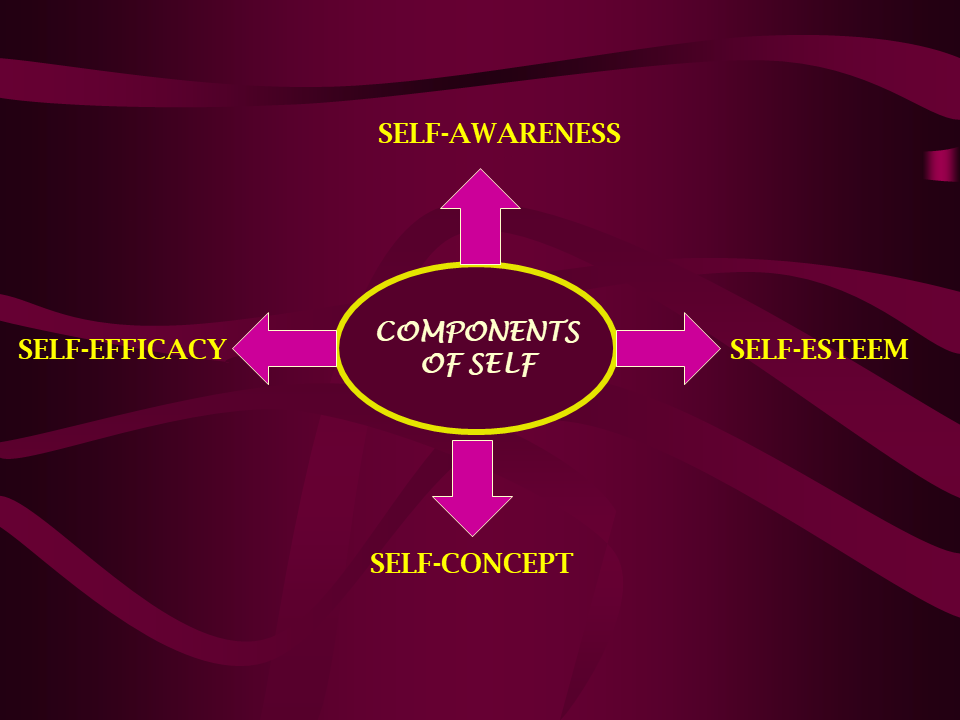
In psychology, self is defined as the sum of a person’s attributes. It refers to a person’s physical, mental, emotional and spiritual traits that are responsible for his own thoughts, feelings and behaviours. Self is a complex concept that includes Self-awareness, Self-concept, Self-esteem & Self-efficacy. These concepts together guide a person to obtain his self-perception and facilitate his Self-reflection.
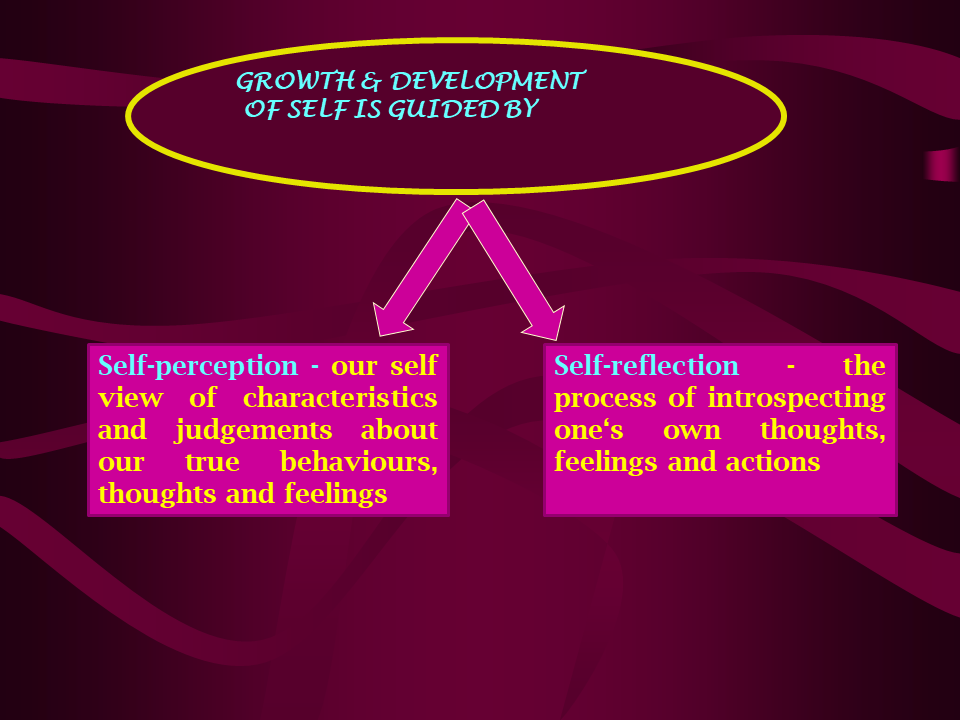
Self-perception refers to our self view and understanding of characteristics and judgements about our true behaviours, thoughts and feelings. Such views facilitate self-reflection. Self-reflection is the process of introspecting one‘s own thoughts, feelings and actions to gain a deeper understanding of our strengths and weaknesses. Self-reflection is therefore the process of looking inward whereas self-perception is the way we see ourselves. Both play a vital role in the growth and development of our self-awareness and self-concept. Thus, knowing one self is an art and is the beginning of all wisdom.
HIGHLIGHTS:
Self means an individual’s perception or awareness of oneself such as the physical attributes, abilities, personality, ways of doing things.
Self is a complex concept that includes Self-awareness, Self-concept, Self-esteem & Self-efficacy.
Self-perception refers to our self view of characteristics and judgements about our true behaviours, thoughts and feelings.
Self-reflection is the process of looking inward or introspecting one's self.
Both self-perception and Self-reflection play a vital role in the growth and development of our self-awareness and self-concept.
INTERESTING TITBIT:
Sri. Shankaracharya, the proponent of Adwaitha Philosophy was asked the question Who are you? when he approached his teacher to take him as disciple. Shankaracharya started by negating what he is not and then to say what he is. The set of 6 verses/ shlokas ‘Nirvana Shatkam’ starts with
I am not the mind, intellect, ego or memory (the four aspects of what is known as Antahkarana). Nor am I (the five organs of perception) the ear, tongue, nose, eyes, (or skin), nor (the five elements) the space, earth, fire, air and water. I am pure Knowledge and Bliss, I am Siva, auspiciousness itself. [Verse 1] *
*https://vedantastudents.com/wp-content/uploads/2019/10/06.-Nirvana-Shatkam.pdf retrieved on 08.05.2025